10 Best Low GI Vegetables in India for Better Blood Sugar Control
Across India, more people are becoming conscious about managing their blood sugar levels, weight, and metabolic health. Whether someone is living with diabetes, struggling with PCOS, or simply trying to adopt healthier eating habits, the glycemic index (GI) of foods plays an important role in everyday diet choices.
Vegetables are often the foundation of a healthy plate, but not all vegetables affect blood sugar in the same way. Some cause rapid glucose spikes, while others release energy slowly and steadily. This is where low GI vegetables in India become particularly valuable.
In this article, we will explore the 10 best low glycemic index vegetables in India, understand their benefits, and learn practical ways to include them in daily Indian meals.
What is Glycemic Index (GI)?
The glycemic index (GI) is a scientific ranking system that measures how quickly carbohydrate-containing foods raise blood sugar levels after consumption.
Foods are categorized into three groups:
| GI Value | Category | Effect on Blood Sugar |
|---|---|---|
| 55 or less | Low GI | Slow, steady rise in blood sugar |
| 56–69 | Medium GI | Moderate increase |
| 70 or above | High GI | Rapid blood sugar spike |
Low GI foods are digested and absorbed more slowly, which results in gradual glucose release into the bloodstream.
For individuals managing diabetes, insulin resistance, PCOS, or weight management, choosing low glycemic index foods can significantly improve metabolic stability.
Vegetables are particularly beneficial because many are naturally low in carbohydrates and rich in fiber, antioxidants, and micronutrients.
Why Low GI Vegetables Are Important
Low GI vegetables do more than just help regulate blood sugar. They support several aspects of long-term health.
1. Help Maintain Stable Blood Sugar
Low GI vegetables release glucose slowly. This prevents sudden spikes and crashes in blood sugar levels, which is crucial for diabetes management.
2. Improve Insulin Sensitivity
Certain vegetables contain plant compounds that help improve the body’s response to insulin, making them useful in PCOS and metabolic syndrome.
3. Promote Better Weight Management
Fiber-rich vegetables increase satiety, helping individuals avoid overeating and maintain a healthy calorie balance. Thus it helps to loose weight.
4. Provide Essential Nutrients
Low GI vegetables are rich in vitamins such as vitamin C, folate, magnesium, and potassium, all of which support metabolic health.
5. Reduce Risk of Chronic Diseases
A diet rich in low glycemic vegetables has been associated with reduced risks of cardiovascular diseases, inflammation, and digestive issues.
10 Low GI Vegetables in India
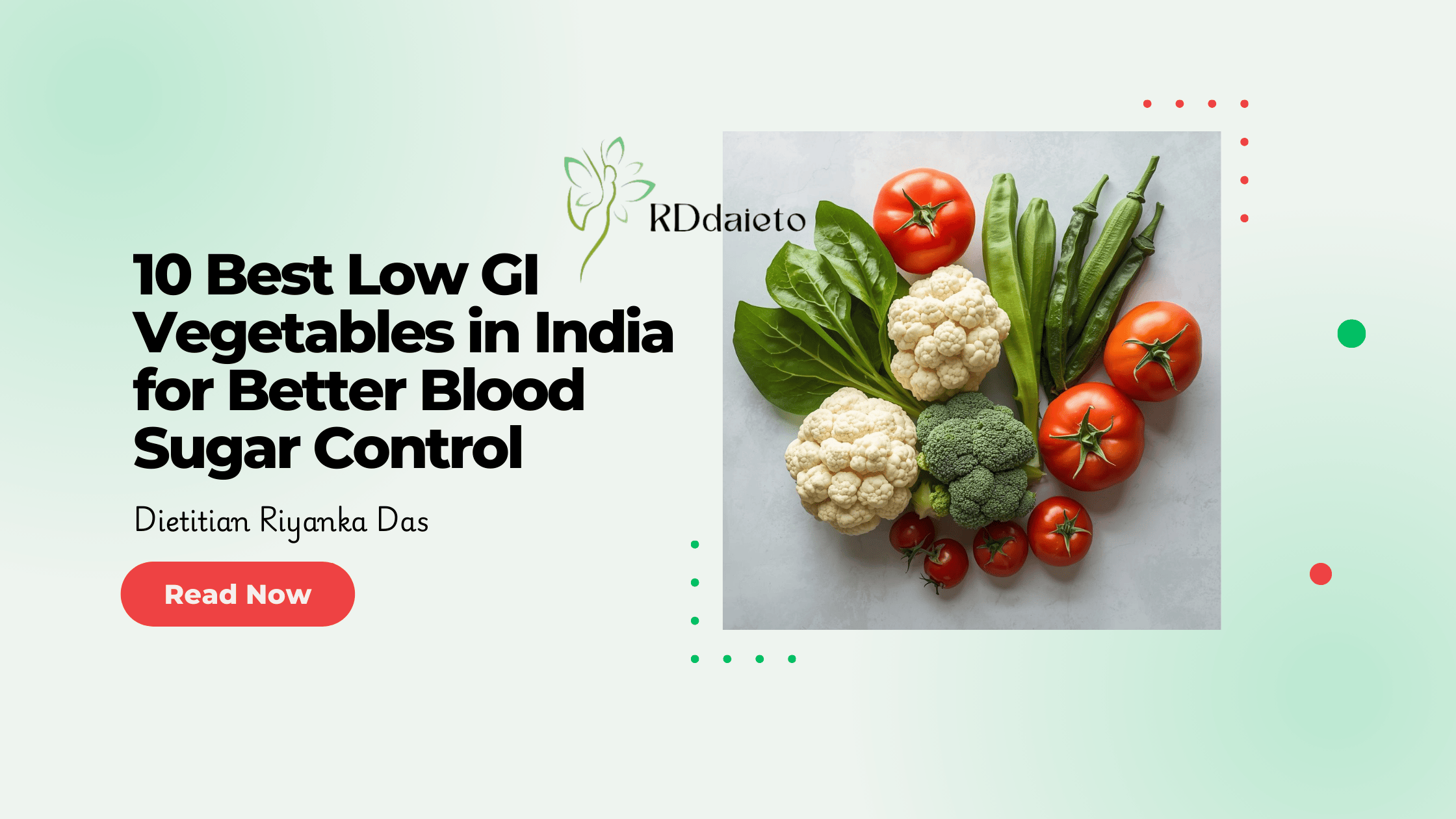
India offers a wide variety of vegetables that naturally have a low glycemic index and can easily fit into traditional meals.
1. Spinach (Palak)
GI: 15
Spinach is one of the most nutrient-dense vegetables available.
Benefits
- Extremely low GI
- Rich in iron, folate, and magnesium
- Supports blood pressure regulation
How to eat
Palak can be consumed as:
- Palak dal
- Palak paneer
- Added to soups and smoothies
2. Broccoli
GI: 15
Broccoli is gaining popularity in Indian kitchens due to its powerful health benefits.
Benefits
- Contains sulforaphane, which improves insulin sensitivity
- High fiber content
- Supports detoxification
How to eat
- Lightly sauted broccoli sabzi
- Mixed vegetable stir fry
- Broccoli soup
3. Cabbage (Patta Gobhi)
GI: 15
Cabbage is widely available, affordable, and extremely versatile.
Benefits
- Very low calorie
- Supports digestive health
- Rich in vitamin C
How to eat
- Cabbage sabzi
- Vegetable paratha stuffing
- Raw cabbage salad
4. Cauliflower (Phool Gobhi)
GI: 15
Cauliflower is an excellent low carbohydrate vegetable.
Benefits
- Low GI and low carbohydrate
- Good source of vitamin C
- Supports gut health
How to eat
- Gobhi sabzi
- Cauliflower rice
- Mixed vegetable curry
5. Okra (Bhindi)
GI: 17
Okra is commonly used in Indian cooking and has unique blood sugar benefits.
Benefits
- High soluble fiber
- Helps slow glucose absorption
- Supports digestive health
How to eat
- Bhindi masala
- Bhindi stir fry
- Added to sambar
6. Bitter Gourd (Karela)
GI: 18
Bitter gourd has long been used in traditional diets for managing blood sugar.
Benefits
- Contains compounds that mimic insulin
- Helps regulate glucose metabolism
- Supports liver health
How to eat
- Karela sabzi
- Stuffed karela
- Bitter gourd juice (in moderation)
7. Tomatoes
GI: 30
Tomatoes are technically fruits but nutritionally treated as vegetables in cooking.
Benefits
- Low GI
- Rich in lycopene
- Supports heart health
How to eat
- Tomato chutney
- Added to curries and salads
- Tomato soup
8. Onion
GI: 10
Onions add flavor and nutritional value to many Indian dishes.
Benefits
- Contains quercetin, a powerful antioxidant
- May support blood sugar regulation
- Improves gut health
How to eat
- Raw onion salad
- Added to sabzis and curries
- Onion chutney
9. Green Peas
GI: 22
Green peas have a slightly higher GI than other vegetables but remain beneficial due to fiber.
Benefits
- Good plant protein source
- Supports muscle health
- Provides vitamin K and B vitamins
How to eat
- Matar paneer
- Vegetable pulao
- Peas soup
10. Carrots
GI: 30
Carrots provide essential antioxidants and fiber.
Benefits
- Rich in beta-carotene
- Supports eye health
- Helps regulate digestion
How to eat
- Carrot salad
- Carrot sabzi
- Carrot soup
Also Read: 7 Best Fruits for Diabetes
How to Include These Vegetables in Daily Indian Diet
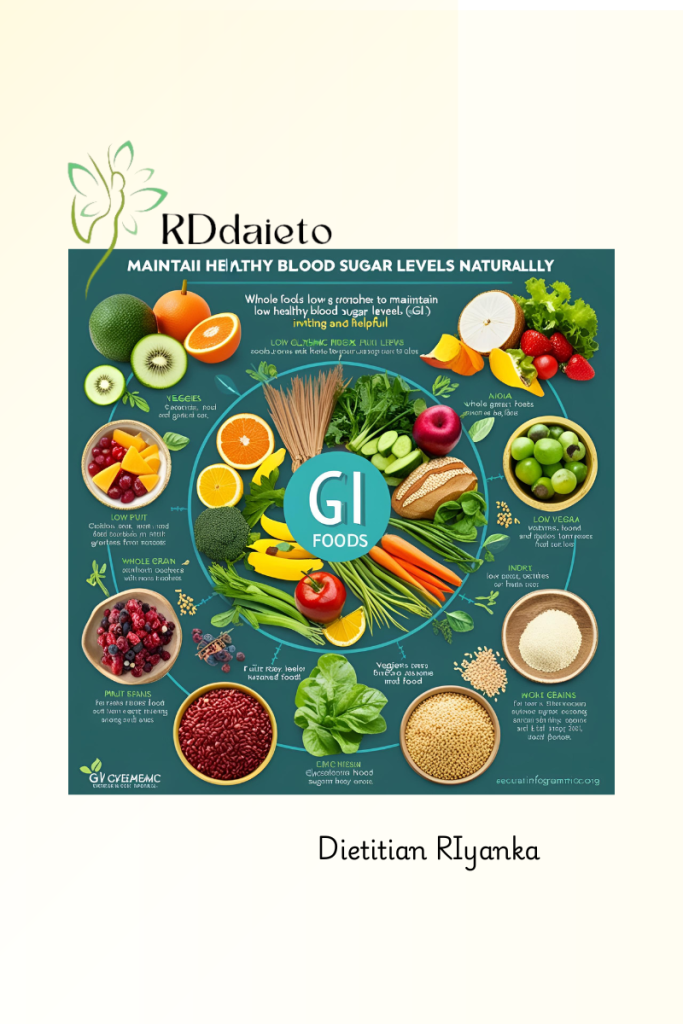
Adding low GI vegetables to daily meals does not require drastic dietary changes. Small adjustments can significantly improve nutritional quality.
Add Vegetables to Every Meal
Try to include at least one low GI vegetable in each meal.
Example:
- Breakfast: Vegetable omelette with spinach
- Lunch: Dal with cabbage sabzi
- Dinner: Mixed vegetable curry with broccoli and peas
Choose Fiber-Rich Cooking Methods
Healthy preparation methods help maintain low glycemic impact.
Preferred cooking methods:
- Steaming
- Light sautéing
- Grilling
- Pressure cooking with minimal oil
Combine with Protein
Pairing vegetables with protein sources helps slow glucose absorption.
Examples:
- Palak paneer
- Bhindi with curd
- Vegetable khichdi
Also Read: Top 10 Low Glycemic Index (GI) Foods to Control Blood Sugar Level Naturally
Low GI Diet Tips for Diabetes & PCOS
Individuals managing diabetes or PCOS should focus on balanced meals rather than just individual foods.
1. Prioritize Non-Starchy Vegetables
Fill half of your plate with low GI vegetables to increase fiber intake.
2. Avoid Overcooking
Overcooking vegetables may increase their glycemic impact. Light cooking helps retain nutrients and fiber.
3. Pair with Healthy Fats
Healthy fats slow digestion and improve satiety.
Examples:
- Mustard oil
- Olive oil
- Nuts and seeds
4. Maintain Portion Control
Even low GI foods should be consumed in balanced quantities as part of a complete diet.
5. Stay Hydrated
Adequate hydration helps regulate metabolism and digestion.
Sample Low GI Meal Plate
A balanced low glycemic Indian plate may look like this:
| Plate Section | Example Foods |
|---|---|
| Half plate | Spinach, cabbage, broccoli sabzi |
| One quarter | Whole grains such as brown rice or millets |
| One quarter | Protein like dal, paneer, or fish |
| Side | Salad with tomato, onion, carrot |
| Healthy fat | A teaspoon of mustard oil or ghee |
This structure helps stabilize blood sugar while providing essential nutrients.
When to Consult a Dietitian
While general dietary guidelines can help many people, individual nutritional needs vary depending on several factors:
- Medical conditions
- Lifestyle
- Age
- Physical activity levels
- Hormonal health
A registered dietitian can design a personalized low GI diet plan tailored to your specific health goals. This is particularly helpful for individuals dealing with diabetes, PCOS, weight management, or metabolic disorders.
Personalized guidance ensures balanced nutrient intake, proper portion sizes, and sustainable eating habits.
For a personalized low-GI diet plan, consult Dietitian Riyanka at RD Daieto.
Frequently Asked Questions (FAQs)
1. What vegetables have the lowest glycemic index in India?
Some of the lowest glycemic index vegetables in India include spinach (palak), broccoli, cabbage, cauliflower, okra (bhindi), bitter gourd (karela), tomatoes, onions, carrots, and green peas.
2. Are low GI vegetables good for diabetes management?
Yes. Low GI vegetables for diabetes are beneficial because they release glucose gradually into the bloodstream. Their high fiber content also slows carbohydrate absorption, improves satiety, and supports better blood sugar control throughout the day.
3. Can people with PCOS benefit from low glycemic vegetables?
Absolutely. A low GI diet for PCOS can help regulate insulin levels, which plays a key role in hormonal balance. Including vegetables such as spinach, broccoli, bitter gourd, and cabbage regularly may support metabolic health and reduce insulin resistance.
4. How many low GI vegetables should be eaten daily?
Nutrition experts generally recommend filling at least half of the plate with vegetables, particularly non-starchy or low GI varieties. Consuming 3–5 servings of vegetables daily helps provide fiber, antioxidants, and essential nutrients for better metabolic health.
5. Do cooking methods affect the glycemic index of vegetables?
Yes, cooking methods can influence the glycemic impact of vegetables. Light steaming, sautéing, or grilling helps retain fiber and nutrients. Overcooking vegetables may increase their glycemic response and reduce their nutritional value.
Source: Glycemic Index Guide