Calculate Your Ideal BMI With BMI Formula & BMI Chart
BMI or Body Mass Index is a tool that helps to estimate the nutritional status and sometimes works as an indicator of chronic disease risk. Using BMI, we can plot our weight into these categories :
- Underweight
- Normal
- Overweight
- Obese
- Obesity grade I
- Obesity grade II
- Obesity grade III.

How to calculate the Ideal BMI?
The formula of calculating BMI is weight in kilogram (kg) divided by height in meter squared.
 |
| Formula of BMI |
Ideal BMI Chart
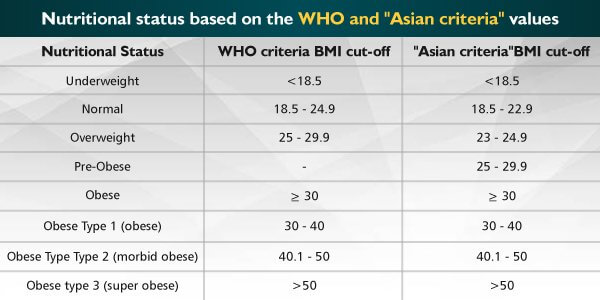
After calculating the BMI, we can check our body nutritional status like underweight, normal or obese. Generally below 18.5 is categorized as ‘underweight’, 18.5-24.9 (for Asian, it is not more than 22.9) is described as ‘normal’ above 25 is considered as ‘overweight’ and above 30 is categorized as ‘obese’.
3 ranges of BMI are used to describe the level of risk for obese people:
- Obesity grade 1 (30-40) : low risk
- Obesity grade 2 (40.1-50) : moderate risk
- Obesity grade 3 (>50) : severe risk
How to calculate the BMI for Kids and Teens?
BMI calculation can be started but the formula is different from adults. The pediatrician or child nutritionist will determine the BMI during routine checkups by plotting data like age, height and weight of the child on the standard gender- specific growth charts. The BMI can be changes with the age, height and weight (1).

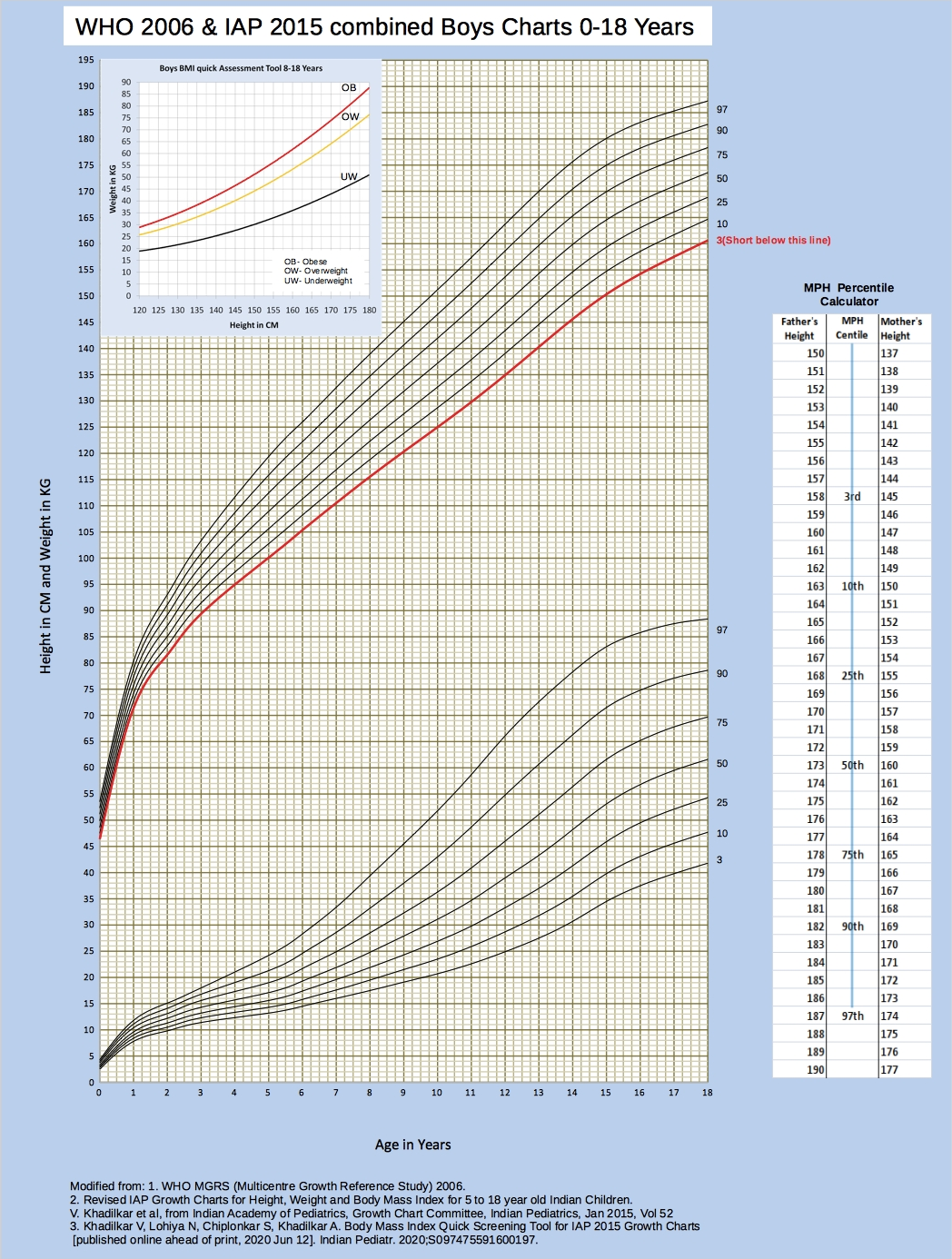
Source: https://iapindia.org/iap-growth-charts/
For children and teens under age 20, BMI is a percentile ranking that compares children of the same age and sex. This is because a child’s body fat makeup differs between boys and girls and changes often as they grow. There are four percentile rankings:
- Less than 5th percentile: Underweight
- 5th percentile to less than 85th percentile: Healthy weight
- 85th percentile to less than 95th percentile: Overweight
- Equal to or greater than the 95th percentile: Obesity
What are the 3 Importance of Ideal BMI?
Body Mass Index (BMI) is a measurement that can be important for a number of reasons, including:
1. Assessing Health Risk
BMI can help determine the risk of diseases associated with being overweight, such as heart disease, high blood pressure, type 2 diabetes, and some cancers.
2. Tracking Weight
BMI can help track weight loss or gain, and can help you make lifestyle changes to reach your ideal weight.
3. Boosting Confidence
Understanding your body weight can help you feel better about yourself and boost your confidence.
Pros and Cons of BMI
Pros –
BMI is a easy and widespread tool for popular studies and health screening. It has pros like:
- Clinical use: BMI is used in many treatment guidelines and can help clinicians provide preventative care.
- Surgical care: BMI can help predict recovery time after surgery and the risk of post-surgical complications.
- Childhood BMI: BMI can help predict health and disease later in life.
Cons –
While BMI offers a quick and easy screening method, it’s not without its limitations. One significant drawback is that it doesn’t differentiate between muscle and fat. Thus, a highly muscular person might be classified as overweight or obese despite having a healthy body fat percentage. Additionally, BMI doesn’t account for fat distribution, which is crucial for assessing health risks.
“The fact is, there is not a precise link between weight and health outcomes, nor is there evidence to support a fixed belief that higher weight always equals worsening health,”
Russell says. “A person’s health is influenced by a complex mix of health behaviors, genetic factors, lean mass, fitness, and environmental risks.”(2)
Why Does My BMI Not Ideal Tool Always?
BMI is a useful screening tool to assess whether you may be at risk for weight-related health conditions. However, since it doesn’t directly measure body fat, there are several crucial factors it doesn’t account for:
- Fat distribution: One key aspect that BMI cannot indicate is where fat is stored in the body. Subcutaneous fat sits just beneath the skin and is visible, while visceral fat surrounds vital organs. Visceral fat, especially in the abdominal area, significantly impacts health and can increase the risk of conditions like diabetes, heart disease, and certain cancers.
- Age: As people age, starting around 30, the percentage of body fat tends to increase as a proportion of total body weight.
- Sex: On average, women (or individuals assigned female at birth) have about 10% more body fat than men (or those assigned male at birth) at the same BMI.
- Ethnicity: Variations in body composition can occur across different races and ethnic groups, even at the same BMI. These differences include aspects like bone density, body fat percentage, and overall body size.
- Muscle mass: Since BMI is a simple ratio of weight to height, it does not account for muscle mass. A person with a higher muscle percentage may have the same BMI as someone with more body fat.
- Pregnancy & Lactation: BMI is not a suitable measure for determining a healthy weight during pregnancy and lactation. Consult your healthcare provider to understand the appropriate weight range for you at this time.
The Bottom Line
There is no single formula that can measure a person’s health. For a more accurate health assessment, consider combining BMI with other measurements like body fat percentage and waist circumference.
As a certified diet consultant, I must say instead of calculating a healthy BMI or ideal body weight, it is better to focus on your long term health journey. Maintain a sustainable diet plan, moving your body, spending your love one, maintain a sleeping routine, smoke, vape or drink less as much as possible.
For personalized advice on achieving and maintaining a healthy weight, book a consultation with us today.
FAQs
1. How is BMI Related to Weight Loss?
- A BMI below 18.9 is considered as underweight (not for all case) and he/ she needs nutrition for gaining weight.
- On other hand, BMI more than 30 is called as obesity and he/ she needs nutrition for losing weight.
2. Is BMI the Best Way to Measure Healthy Weight?
BMI is a useful screening tool to assess whether you may be at risk for weight-related health conditions. However, since it doesn’t directly measure body fat, there are several crucial factors like fat distribution, age, sex, measuring body fat percentage, pregnancy and lactation.
3. What is The Formula of BMI?
BMI is a simple calculation that uses a person’s height and weight to designate a classification. The formula is BMI = kg/m2.