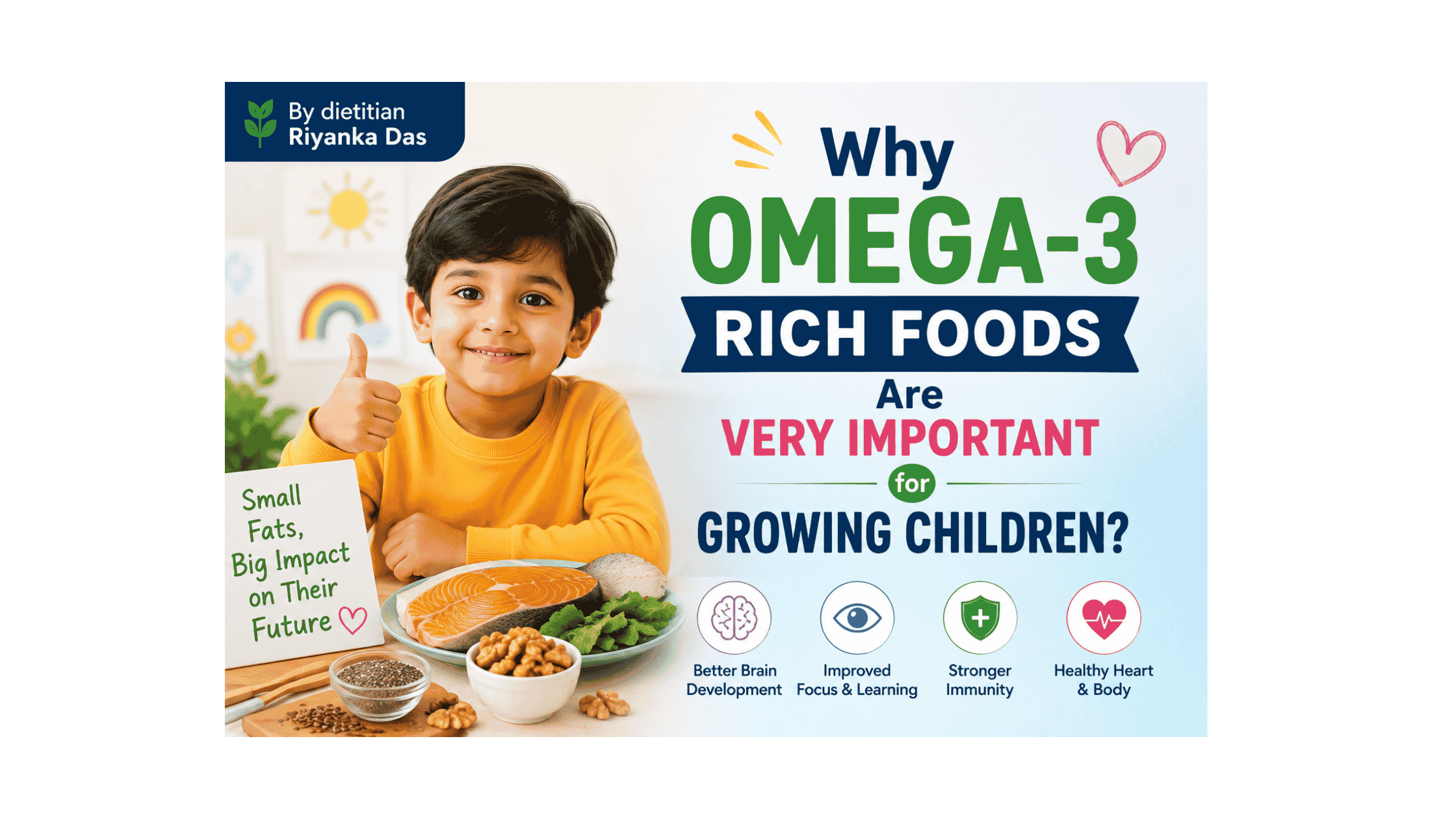
Why Omega-3 Rich Foods Are Extremely Important for Growing Children: Benefits, Sources, and Expert Nutrition Advice
Introduction
Every parent wants their child to grow into a healthy, intelligent, active, and confident individual. While genetics play a role in growth and development, nutrition is one of the most powerful factors influencing a child’s physical health, brain development, learning ability, immunity, and emotional well-being.
Among the many nutrients children need, Omega-3 fatty acids are often overlooked despite being one of the most essential nutrients for healthy growth and development. These healthy fats are vital for brain function, vision, heart health, immunity, behavior regulation, and overall development from infancy through adolescence.
Unfortunately, many children consume diets rich in processed foods and poor in omega-3-rich foods, increasing the risk of nutrient deficiencies that can affect learning, concentration, immunity, and long-term health.
In this article, we’ll explore the science-backed reasons why omega-3-rich foods are crucial for growing children, the best food sources, signs of deficiency, and how parents can ensure their child gets enough of this important nutrient.
What Are Omega-3 Fatty Acids?
Omega-3 fatty acids are essential polyunsaturated fats that the body cannot produce on its own. Therefore, they must be obtained through food or supplements.
There are three major types of omega-3 fatty acids:
1. DHA (Docosahexaenoic Acid)
DHA is the primary structural fat found in the brain and retina of the eyes. It is particularly important during infancy and childhood when the brain is rapidly developing.
2. EPA (Eicosapentaenoic Acid)
EPA supports immune function, heart health, and helps regulate inflammation throughout the body.
3. ALA (Alpha-Linolenic Acid)
ALA is found in plant foods such as flaxseeds, walnuts, and chia seeds. The body converts small amounts of ALA into EPA and DHA.
Why Growing Children Need More Omega-3
Childhood is a period of rapid growth and development.
During this stage:
- Brain cells are forming new connections.
- Learning and memory abilities are developing.
- Vision is maturing.
- Immunity is strengthening.
- Bones and muscles are growing rapidly.
Omega-3 fatty acids play a direct role in each of these processes.
Without adequate intake, children may not achieve their full developmental potential.
1. Omega-3 Supports Brain Development and Intelligence
The Brain Is Made of Fat
Nearly 60% of the brain consists of fat, and DHA is one of its most important structural components.
During childhood, the brain undergoes rapid growth. DHA helps build and maintain brain cell membranes, ensuring efficient communication between neurons.
Benefits for Brain Development
Children who consume adequate omega-3 may experience:
- Better memory
- Improved concentration
- Faster learning
- Enhanced problem-solving skills
- Improved cognitive performance
Several studies suggest that children with higher DHA levels often perform better academically and demonstrate stronger learning abilities.
2. Improves Attention and Concentration
Many parents struggle with children who:
- Get distracted easily
- Have difficulty focusing
- Forget instructions
- Lose interest quickly
Research indicates that omega-3 fatty acids may help support attention span and concentration.
DHA helps optimize communication between brain cells, allowing children to process information more effectively.
This is particularly important during school years when academic demands increase.
3. Supports Healthy Vision Development
The retina of the eye contains high concentrations of DHA.
During infancy and childhood, adequate DHA intake supports:
- Visual development
- Eye coordination
- Sharp vision
- Retinal health
Children with insufficient omega-3 intake may not receive optimal support for visual development during critical growth periods.
4. Strengthens the Immune System
Children are constantly exposed to viruses, bacteria, and environmental allergens.
Omega-3 fatty acids help regulate immune responses and reduce excessive inflammation.
Benefits include:
- Better resistance to infections
- Faster recovery from illness
- Improved immune balance
- Reduced inflammatory responses
A stronger immune system means fewer sick days and improved overall well-being.
5. Supports Healthy Emotional and Behavioral Development
Mental and emotional health begins early in life.
Research suggests omega-3 fatty acids may help support:
- Emotional regulation
- Mood stability
- Stress management
- Healthy social behavior
Children who consume adequate omega-3 may be better equipped to manage everyday emotional challenges.
6. Promotes Healthy Heart Development
Although heart disease is generally considered an adult concern, cardiovascular health begins in childhood.
Omega-3 fatty acids support:
I. Healthy Cholesterol Balance
Omega-3 helps maintain healthy lipid levels from an early age.
II. Reduced Inflammation
Chronic inflammation contributes to long-term cardiovascular risk.
III. Healthy Blood Vessel Function
Omega-3 promotes flexible and healthy blood vessels.
Establishing healthy dietary habits during childhood can reduce future heart disease risk.
7. Supports Bone and Joint Health
Healthy growth requires strong bones and joints.
Emerging evidence suggests omega-3 fatty acids may:
- Improve calcium utilization
- Support bone mineralization
- Reduce inflammatory joint discomfort
- Promote healthy skeletal development
Combined with calcium, vitamin D, and physical activity, omega-3 contributes to overall musculoskeletal health.
8. May Improve Sleep Quality
Sleep is essential for growth, learning, and immunity.
Some research suggests omega-3 fatty acids may help:
- Improve sleep duration
- Support sleep quality
- Enhance daytime alertness
Children who sleep well often show better academic performance, mood regulation, and physical growth.
Signs Your Child May Not Be Getting Enough Omega-3
Possible signs include:
- Poor concentration
- Frequent illnesses
- Dry skin
- Mood fluctuations
- Learning difficulties
- Low energy levels
- Poor memory
- Behavioral challenges
These symptoms can have multiple causes, but inadequate omega-3 intake may contribute.
Best Omega-3 Rich Foods for Children
A. Fatty Fish
Excellent sources of DHA and EPA:
- Salmon
- Sardines
- Mackerel
- Tuna (in moderation)
Aim for 1–2 servings weekly based on age and dietary preferences.
B. Flaxseeds
Ground flaxseeds can be added to:
- Milk
- Smoothies
- Oats
- Yogurt
- Rotis
C. Chia Seeds
Rich in plant-based omega-3 and fiber.
Can be included in:
- Puddings
- Smoothies
- Homemade desserts
D. Walnuts
A convenient snack rich in ALA omega-3.
Can be added to:
- School tiffin boxes
- Breakfast cereals
- Homemade energy balls
E. Soybeans and Soy Products
Useful for vegetarian families.
Options include:
- Soy milk
- Tofu
- Roasted soy nuts
F. Fortified Foods
Some products are enriched with omega-3:
- Fortified milk
- Yogurt
- Eggs
- Cereals

Also Read: 10 Best Quick & Healthy Tiffin Ideas for School Children
How Much Omega-3 Do Children Need?
Requirements vary according to age, growth stage, and overall diet.
A pediatric dietitian can assess:
- Dietary intake
- Growth patterns
- Medical history
- Nutritional gaps
to determine individual needs.
Should Children Take Omega-3 Supplements?
Supplements may be beneficial for:
- Picky eaters
- Children who avoid fish
- Vegetarian children
- Children with increased nutritional needs
However, supplementation should be guided by a healthcare professional or pediatric dietitian.
Not all supplements provide the same quality, dosage, or purity.
Tips for Parents to Increase Omega-3 Intake
Make Fish Child-Friendly
Prepare fish as:
- Fish cutlets
- Fish sandwiches
- Fish tacos
- Fish patties
Add Seeds to Everyday Meals
Mix flaxseed or chia seeds into:
- Smoothies
- Oats
- Yogurt
- Homemade pancakes
Replace Processed Snacks
Offer:
- Walnuts
- Roasted soybeans
- Nut-based snacks
Be Consistent
Small daily additions often work better than occasional large servings.
Why a Pediatric Dietitian Can Help
Every child has unique nutritional needs.
A pediatric dietitian can:
- Evaluate growth patterns
- Identify nutrient deficiencies
- Create child-friendly meal plans
- Support picky eaters
- Improve overall nutrition quality
Personalized guidance often leads to better long-term health outcomes than generic advice.
How RD Daieto Can Help?
RD Daieto is a personalized diet consultation, where our aim is not not only provide any ordinary or generic diet plan but also to analyse
- Growth analysis
- Diet review
- Picky eating assessment
- Nutrient gap screening
And then we guide as per your child’s need.
Final Thoughts
Omega-3 fatty acids are among the most important nutrients for growing children. From supporting brain development and learning to improving immunity, vision, emotional well-being, and heart health, these healthy fats contribute to nearly every aspect of childhood growth.
By including omega-3-rich foods regularly and seeking professional nutrition guidance when needed, parents can provide their children with a strong foundation for lifelong health and success.
Ready to Optimize Your Child’s Nutrition?
If you’re concerned about your child’s growth, eating habits, immunity, concentration, or overall nutrition, consult a qualified pediatric dietitian for a personalized nutrition assessment and child-friendly meal plan.
A small change today can make a big difference in your child’s future.
FAQs
1. What are the top 6 omega-3 rich foods sources for children?
Fatty fish, flaxseeds, chia seeds, walnuts, soy and soy products and fortified foods are the top 6 best omega-3 fatty acid food sources for the children.
2. Should Children Take Omega-3 Supplements?
Supplements only be recommended when the children is picky eaters, or the children who avoid fish or the children who are vegetarian or children with increased nutritional needs.