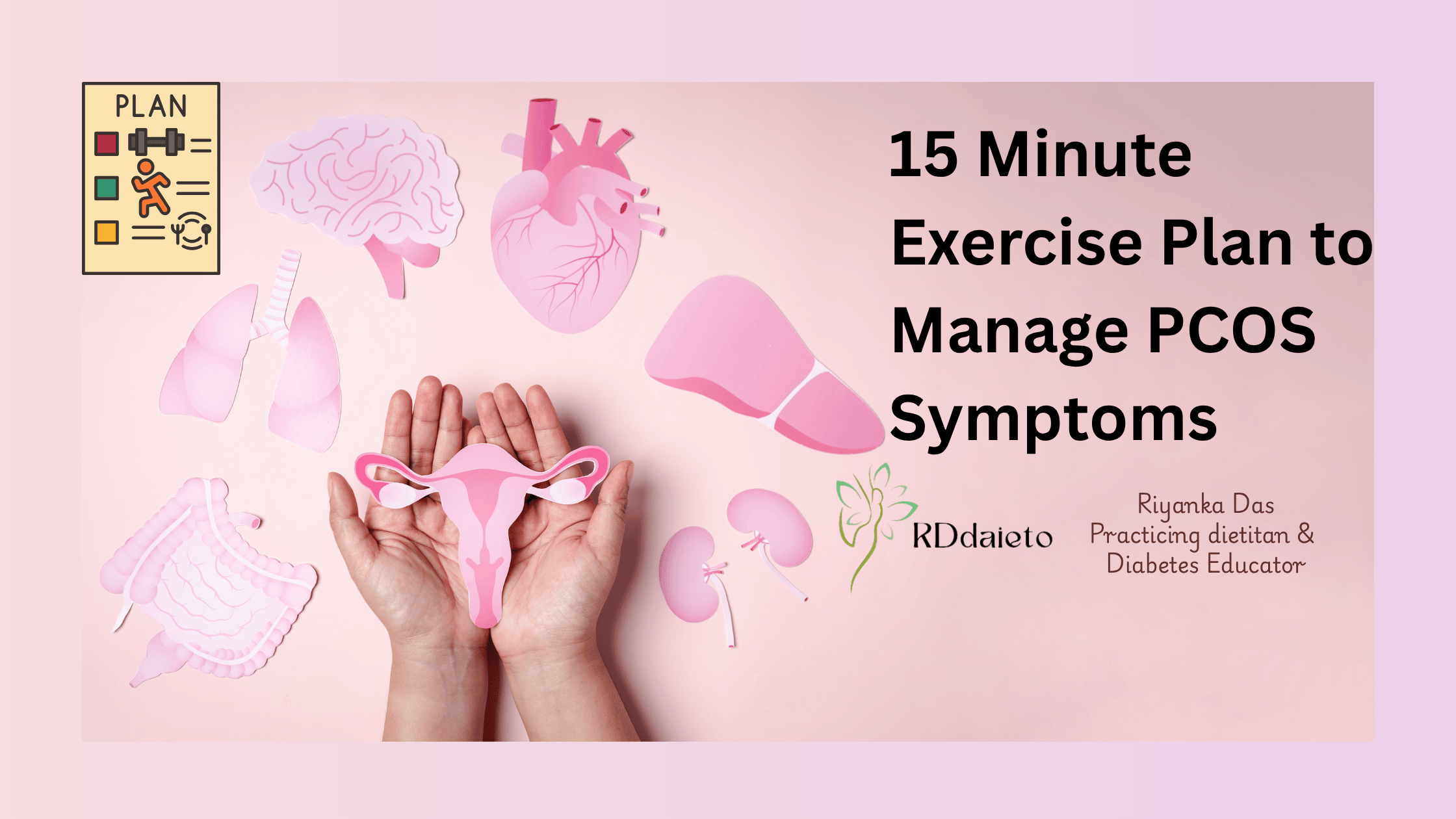
15 Minute Exercise Plan to Manage PCOS Symptoms
If you are living with Polycystic Ovary Syndrome (PCOS), chances are you’ve heard the same advice repeatedly:
“Just exercise more.”
“Just lose weight.”
Yet many women with PCOS know that it’s not that simple.
You may experience:
- Constant fatigue
- Unexplained weight gain
- Irregular menstrual cycles
- Hormonal acne
- Difficulty losing weight despite trying workouts
Many women start intense exercise routines—one-hour gym sessions, aggressive cardio, or high-volume workouts—hoping to “fix” PCOS.
But here’s the surprising truth:
Long, exhausting workouts can sometimes worsen PCOS symptoms.
Why?
Because overtraining increases cortisol, the body’s primary stress hormone.
When cortisol remains elevated:
- Insulin resistance worsens
- Fat storage increases (especially abdominal fat)
- Hormonal imbalance becomes more pronounced
- Energy levels drop even further
For women with PCOS, short, strategic exercise often works better than long, exhausting workouts.
This is where the 15-minute exercise strategy becomes powerful.
A consistent 15-minute routine, when designed correctly, can help:
- Improve insulin sensitivity
- Support hormonal balance
- Boost metabolism
- Reduce chronic fatigue
And most importantly — it is sustainable, which is the real secret to long-term PCOS management.
The Science Behind Short Workouts for PCOS
PCOS is fundamentally a hormonal and metabolic disorder.
One of the most important underlying factors is insulin resistance.
Studies show that 50–70% of women with PCOS experience insulin resistance, even if they are not overweight.
When insulin resistance occurs:
- The body produces excess insulin
- High insulin stimulates the ovaries to produce excess androgens (male hormones)
- Elevated androgens disrupt ovulation and menstrual cycles
This hormonal cascade leads to symptoms like:
- Irregular periods
- Acne
- Weight gain
- Hair thinning
- Excess facial hair
Where Exercise Fits In
Exercise improves PCOS in two key ways:
1. Improves Insulin Sensitivity
Research says that muscle contractions during exercise, like cycling, brisk walking allow cells to absorb glucose without needing large amounts of insulin.
This reduces circulating insulin levels and helps restore hormonal balance.
2. Supports Lean Muscle Growth
Muscle tissue is metabolically active.
The more lean muscle you build, the more efficiently your body uses glucose.
This helps:
- Stabilize blood sugar
- Improve metabolic rate
- Support fat loss
Why 15 Minutes Can Be Enough
Short-duration workouts that combine strength, metabolic bursts, and mobility can produce powerful hormonal benefits without overwhelming the body.
A 15-minute session can:
- Activate large muscle groups
- Stimulate insulin uptake
- Improve circulation
- Reduce sedentary lifestyle damage
Most importantly, it avoids excessive cortisol spikes that often occur with prolonged workouts.
Consistency matters more than duration.
15 minutes daily beats 2 hours once a week.
The 15-Minute PCOS Exercise Plan
This routine combines three scientifically effective exercise styles:
- HIIT (High Intensity Interval Training)
- Strength Training
- Yoga / Pilates for hormonal balance
You can do this routine at home without equipment.
Total Time: 15 Minutes
Structure:
| Phase | Time |
|---|---|
| Warm-up | 2 minutes |
| Strength Training | 6 minutes |
| HIIT | 4 minutes |
| Yoga/Pilates | 3 minutes |
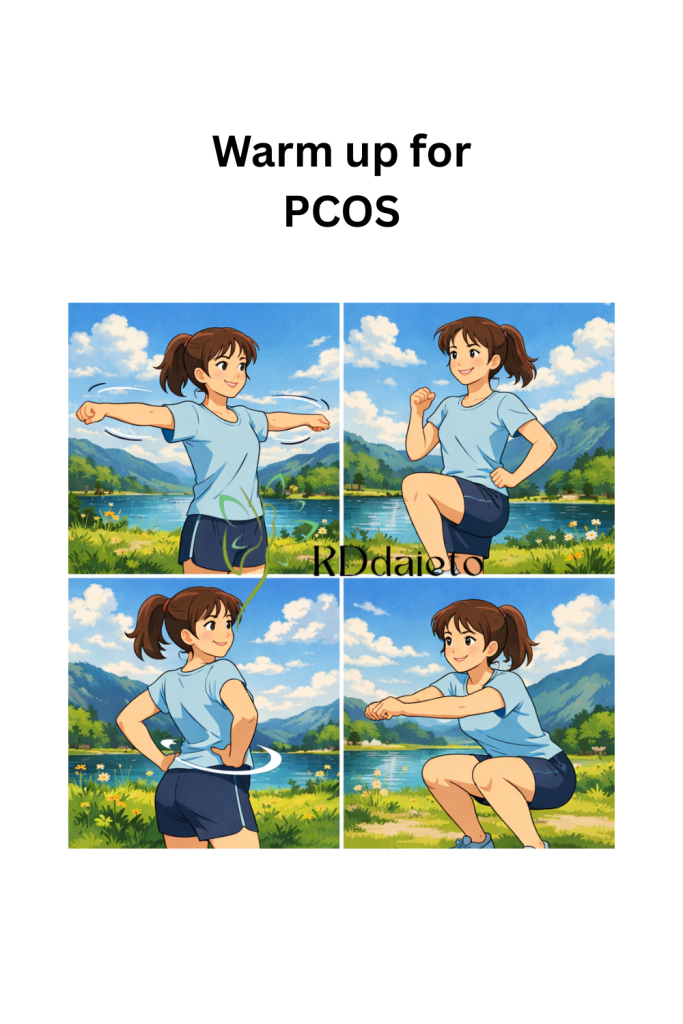
Step 1: Warm-Up (2 Minutes)
Warming up prepares the body and reduces injury risk.
Exercises
Arm Circles – 30 seconds
Improves shoulder mobility and circulation.
Marching in Place – 30 seconds
Gradually increases heart rate.
Hip Rotations – 30 seconds
Activates the pelvic muscles that support reproductive organs.
Bodyweight Half Squats – 30 seconds
Prepares the lower body for strength work.
Step 2: Strength Training (6 Minutes)
Strength training is particularly important for PCOS because muscle improves insulin sensitivity.
Perform each exercise for 45 seconds with 15 seconds rest.
1. Squats
Physiological Benefit:
- Activates large muscles in the legs and glutes
- Improves glucose uptake by muscle cells
Regular squats help the body use carbohydrates more efficiently.
2. Glute Bridges
Physiological Benefit:
- Strengthens the glutes and lower back
- Improves pelvic blood circulation
Step 1: Starting Position
Lie flat on your back on a mat
Bend your knees, feet flat on the floor
Keep feet hip-width apart
Arms relaxed by your sides, palms facing down
👉 Heels should be close to your hips (not too far away)
Step 2: Engage Your Core
Gently tighten your core (abs)
Keep your lower back neutral (don’t arch too much)
Step 3: Lift Your Hips
Push through your heels
Slowly lift your hips toward the ceiling
Squeeze your glutes at the top
👉 Your body should form a straight line from shoulders → hips → knees
Step 4: Hold & Breathe
Hold for 2–3 seconds
Breathe normally (don’t hold your breath)
Step 5: Lower Down
Slowly bring your hips back down
Don’t drop — control the movement
Better circulation supports ovarian health.
3. Wall Push-Ups
Physiological Benefit:
- Builds upper-body muscle
- Improves metabolic rate
More muscle tissue increases daily calorie expenditure.
4. Reverse Lunges
Physiological Benefit:
- Activates multiple muscle groups
- Improves balance and coordination
Compound movements stimulate higher metabolic activity.
Step 3: HIIT Burst (4 Minutes)
High-intensity intervals can improve insulin sensitivity rapidly, even in short durations.
Perform 20 seconds work + 10 seconds rest for 4 rounds.
Exercises
1. Jumping Jacks
Boosts cardiovascular activity and circulation.
2. High Knees
Stimulates core muscles and increases heart rate.
3. Mountain Climbers
Activates the core and shoulders while burning calories.
HIIT stimulates AMPK activation, a metabolic pathway that improves glucose regulation.
Step 4: Yoga / Pilates for Hormonal Balance (3 Minutes)
Mind-body exercises help regulate the stress response, which is crucial for women with PCOS.
1. Cat-Cow Stretch
Improves spinal flexibility and pelvic circulation.
2. Child’s Pose
Activates the parasympathetic nervous system, helping lower cortisol levels.
3. Deep Diaphragmatic Breathing
Slow breathing signals the body to shift from stress mode to recovery mode.
This hormonal reset is important for reproductive health.
The Missing Piece: Why Exercise Alone Is Not Enough
Exercise is powerful—but it cannot compensate for an unhealthy diet.
In PCOS management, nutrition plays an even bigger role than exercise.
Think of exercise as the spark, and diet as the fuel.
Without the right nutritional support, hormonal balance remains difficult to achieve.
The Key Nutritional Pillars for PCOS
1. Low Glycemic Index (GI) Foods
Low-GI foods release glucose slowly, preventing insulin spikes.
Examples include:
- Oats
- Lentils
- Sweet potatoes
- Brown rice
- Whole fruits
2. High-Quality Protein
Protein supports muscle recovery and stabilizes blood sugar.
Sources include:
- Eggs
- Paneer
- Greek yogurt
- Fish
- Lentils
- Chickpeas
3. Healthy Fats
Healthy fats reduce inflammation and support hormone production.
Examples:
- Nuts
- Seeds
- Olive oil
- Avocado
4. Anti-Inflammatory Foods
Chronic inflammation is common in PCOS.
Include foods like:
- Turmeric
- Berries
- Green leafy vegetables
- Fatty fish
5. Balanced Micronutrients
Certain vitamins and minerals are crucial for hormonal balance:
- Magnesium
- Vitamin D
- Zinc
- Omega-3 fatty acids
A well-structured diet ensures these nutrients are consumed in the right proportions.
Our Case Study: How a Simple Routine Changed Everything
A 26-year-old client came to me struggling with classic PCOS symptoms:
- Irregular periods (once every 2–3 months)
- Persistent fatigue
- Weight gain despite dieting
She had tried intense gym workouts, but could not maintain them consistently.
Instead, we started with something simple:
✔ 15 minutes of daily exercise
✔ A balanced PCOS-friendly diet plan
✔ Small lifestyle changes
Within three months, she experienced:
- Improved energy levels
- Reduced sugar cravings
- 4 kg weight loss
- More regular menstrual cycles

But the most important change was consistency.
Because the routine felt manageable, she continued it long-term.
That is the real key to sustainable PCOS management.
The Real Goal: Building Sustainable Habits
Managing PCOS is not about extreme diets or exhausting workouts.
It is about small, consistent lifestyle changes.
A 15-minute daily movement routine can become the foundation of a healthier metabolic system.
Over time, these small habits lead to significant improvements in:
- Hormonal balance
- Energy levels
- Weight management
- Menstrual regularity
But every woman’s hormonal profile is different.
The exact diet, nutrients, and lifestyle adjustments needed for optimal PCOS management vary from person to person.
A Gentle Invitation: PCOS Hormone & Nutrition Audit
If you are struggling with PCOS and feel confused by conflicting advice, you are not alone.
Many women try random diets or exercise routines without understanding their unique metabolic needs.
That is why I offer a PCOS Hormone & Nutrition Audit.
During this consultation, we analyze:
- Age
- Your symptoms
- Food preferences
- Eating patterns
- Hormonal triggers
- Lifestyle habits
Metabolic risk factors
Based on this assessment, I design a personalized nutrition and lifestyle roadmap tailored specifically for your body.
Because managing PCOS should never feel overwhelming.
With the right strategy, the right food choices, and sustainable movement, it is absolutely possible to regain control of your health.
And sometimes, the journey begins with something as simple as 15 minutes a day.
Book a consultation today with RD Daieto.
FAQs
1. Is PCOS fully curable?
No. PCOS is not fully curable. But maintaining a healthy lifestyle can control the PCOS.
2. What is the best PCOS exercise plan for beginners?
Practice 2 mins warm-up and then squats, glut bridge, wall pushups and reverse lunges. To know more, read the full article.
3. Can I lose weight with this 15 mins exercise plan?
Yes, for beginners, you can lose weight with this 15 mins exercise. But make sure you do it consistently.