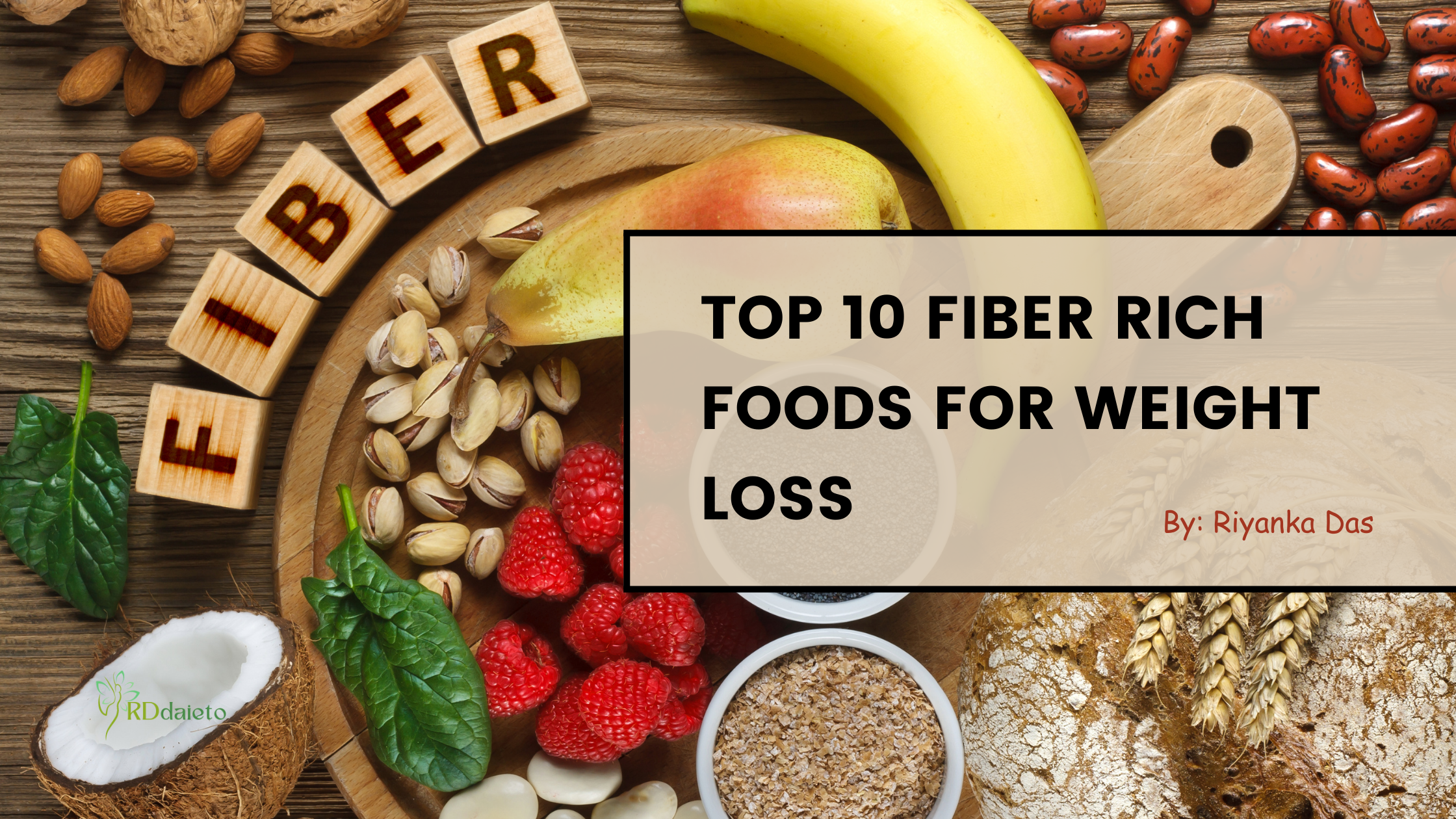
Top 10 Fiber Rich Foods In India For Weight Loss
Very often, as people become more obsessed with losing the extra pounds, they forget about another, crucial component of a healthy body and lifestyle: dietary fiber.
Fiber is much more than just an aid that helps in the digestive process; its influence can reach further, affecting weight loss, health improvement, and even how the body metabolizes nutrients. Indian cuisine, with its diverse and wholesome ingredients, is naturally rich in fiber, making it an excellent choice for those aiming to shed extra pounds.
In this blog, we are discussing about dietary fiber and uncover the top 10 fiber-rich foods in India to enhance your weight loss journey.
What is Fiber?
Fiber is a carbohydrate, and the human body can’t break it down. While other carbohydrates like sugar and starches are almost digested and absorbed into the bloodstream to provide energy, only a small amount of fiber can metabolize in the stomach and intestine and rest of all travels intact through the gastrointestinal tract. Ironically, its lack of absorption is what makes it so healthy.
Sources of Fiber
There are two main classifications of dietary fiber:

1. Soluble Fiber:
Soluble fiber dissolves in water, becoming something more like a gel. It is known to help lower cholesterol and regulate blood sugar levels. Some of the richest dietary sources include foods such as oats, apples, and legumes.
2. Insoluble Fiber:
Insoluble fibers do not dissolve in water. Instead, they increase the bulk of stools and facilitate easy movement of food through the digestive system. It prevents constipation. Good sources of insoluble fiber include whole grains, nuts, and vegetables.
Benefits of Fiber on Weight Loss
Fiber or dietary fiber offers a lot of benefits that would go really well with weight loss. Here is how:
A. It Enhances Satiation
When the fiber dissolve in water, they can form a gel like substance in the stomach which slow down digestion. This keeps you full for longer, so you have lower rates of munching on unhealthy junk.
B. Stabilizes Blood Sugar Level
Most of the other carbs digested into sugar, Soluble fiber controls sugar absorption which stabilizes the blood sugar level. You can avoid to loading more calories or getting cravings for unwanted food.
C. Limits Intake of Calories
When you are consuming more fiber, you are most likely consuming low calorie foods with high micronutrients and antioxidants. You can eat big meals without consuming a lot of calories and it can keeps you full for longer. Thus, it helps you to limit your excess calorie intake.
D. Maintains the Gut Health
Some fibers, also called as prebiotics, helps to feed the healthy gut bacteria, which maintains a balanced microbiome. It actually helps to keep the gut healthy, leading to improved metabolism and less fat storage in the body.
E. Promotes Fat Loss
The binding of fat molecules with soluble fibers minimizes the absorption of dietary fats in the digestive tract, keeping your gut bacteria healthy and promotes overall fat loss as well by reducing your appetite.
Why is Indian Cuisine so High in Fiber
Indian cuisine is a paradise of fiber-rich ingredients, owing to the use of whole grains, pulses, fresh vegetables, and spices. Ingredients such as lentils, millets, leafy greens, which contain a mix of both soluble and insoluble fiber, are used in traditional recipes. Almost all the dishes carry the natural fiber due to the less processed cooking methods. Dal, bajra roti, or a chunky curry, Indian meals are very easy ways through which fiber is automatically added into your diet.
Top 10 Fiber-Rich Foods for Weight Loss in India
Here is the top pick of the high-fiber products found in India to make you lose weight:

1. Oats
Oats have both insoluble fiber and a storehouse of soluble fiber, especially of beta-glucan, which really helps to control blood glucose level, LDL cholesterol level and keeps you full.
Fiber Content: 1 cup cooked oats have 5 gm fiber.
How to Include:
Begin your day with oatmeal with fruits and nuts, or be a binding agent with oats in your cutlets and tikkis.
2. Pulses (Lentils and Beans)
Pulses such as moong dal, rajma (kidney beans), and chana (chickpeas) are full of fiber and protein, which makes them a weight-loss favorite.
Fiber Content: 100g pulses have 5-8 gm fiber.
How to Include:
Add pulses to soups, salads, or prepare a hearty dal tadka with whole spices or making chapati or paratha dough by mixing with cereals like Besan paratha.
3. Millets (Ragi, Bajra, Jowar)
Millets is an ancient grain with exceptionally rich fiber, low carb (good source of complex carbohydrate) content. They are gluten-free and provide long-lasting energy.
Fiber Content: 100g millets have 8-12 gm fiber.
How to Include:
Replace white rice with millet-based dishes like ragi pancake or bajra khichdi or millet crackers with hummas.
4. Leafy Greens (Spinach, Methi, Sarson)
Leafy greens are low in calories but high in dietary fiber, vitamins, minerals and antioxidants which are good for gut health, boost immunity and so on.
Fiber Content: 1 cup of leafy vegetables have approx. 2-6 gm fiber.
How to Include:
Prepare saag-based dishes or add greens to your chapati dough and parathas.
5. Flaxseeds
Flaxseeds are a rich source of soluble fiber, protein as well as omega 3 fatty acids that aid in weight loss and reduction of inflammation. You can eat this to boost your metabolism power.
Fiber Content: 100g of flax seeds have approx. 27.3 gm fiber.
How to Include:
Sprinkle ground flaxseeds over yogurt, smoothies, or salads or can be eaten by just roasted form.
6. Fruits (Guava, Papaya, Apples)
Fruits like guava and apples offer both soluble and insoluble fiber. They are hydrating, low in calories, and packed with natural sugars for instant energy.
Fiber Content: 100gm of seasonal fruits have up to 5 gm fiber. On the other hand, avocado has up to 12.9 gm of fiber.
How to Include:
Consume fruits as a snack, in salads, or blend them into smoothies.
7. Vegetables (Carrots, Cabbage, Cauliflower)
Vegetables are a key part of the weight-loss diet. Root vegetables such as carrots are high in fiber and antioxidants.
Fiber Content: 1 cup of leafy vegetables have approx. 2-6 gm fiber.
How to incorporate:
Cook stir-fries and soups, curries or add vegetables to fill wraps and sandwiches.
8. Whole grains (Brown rice, Quinoa, Whole Wheat)
Whole grains maintain their bran layer, which is full of fiber. Brown rice and quinoa are good substitutes for polished grains.
Fiber Content: 100g of whole grains have approx. 1-3 gm fiber.
How to Include:
Add whole grains to pulao, biryani, or chapatis.
9. Nuts (Almonds, Walnuts)
Nuts are high in fiber and healthier fats. Eating plenty of almonds may reduce your levels of “bad” LDL cholesterol, improve your lipid profile, and target fat burning in your belly area and making it a great weight-loss snack.
Fiber Content: 100 gm of mixed nuts have approx. 7.1 gm fiber.
How to Include:
Sprinkle them over breakfast cereals or used it as nut butters.
10. Chia Seeds
Chia seeds are rich in soluble fiber and expand in the stomach, keeping you full for hours. Moreover, as it is also good in omega 3 fatty acids and proteins, it helps particularly in weight loss.
Fiber Content: 100 gm of chia seeds have approx. 34.4 gm fiber.
How to Add:
Mix chia seeds with water or milk and incorporate them into puddings, smoothies, or overnight oats.
How to Add More Fiber to Your Diet
- Add In Every Meal: Spread your fiber intake throughout the day. Emphasize making high fiber choices at each meal, and snacks like an oatmeal in the breakfast or a salad in lunch etc.
- Start Slow: Start with a little amount and gradually add fiber to give your digestive system time to adapt.
- Mix It Up: Combine fruits with nuts or put leafy greens in lentils.
- Select Whole Grains: Use whole grains instead of refined grains because they all have natural fibers.
- Eat As A Starter: Eat fiber rich foods like salads prevent eating excess calories in the next meal.
- Hydrate Well: Fiber absorbs water, so staying hydrated is crucial to prevent bloating and constipation.
- Plan Your Snacks: Include in your fiber-rich snacks like fruit slices with peanut butter or roasted chickpeas.
- Read The Labels: While going for outside shopping, read and check the fiber content of the food as it helps to prevent from low fiber intake.
Is Fiber Supplement Good For Weight Loss
Fiber supplements are useful for people who cannot acquire the daily recommended intake from their diet. They can help with weight loss by suppressing the feeling of hunger, maintaining stable blood glucose levels, and helping in maintaining healthy gut. Nonetheless, while fiber supplements complement any weight loss approach, they are in no way a replacement for real food that not only supplies a good dose of fiber but also rich sources of essential vitamins, minerals, and antioxidants.
Types of Fiber Supplements
There are some kinds of fiber supplements you found in the markets:
1. Psyllium Husk (Isabgol):
Psyllium is a soluble fiber which absorbs water and forms a gel in the intestinal cavity to induce a feeling of fullness and improve digestion. It is especially used to suppress hunger and control bowel movements.
2. Inulin:
Extraction from chicory root, inulin is a prebiotic soluble fiber that feeds healthy gut bacteria for improved digestion and metabolism.
3. Methylcellulose:
A synthetic fiber that is non-fermentable so is gentler on the gut for people prone to gas or bloating.
4. Glucomannan:
Extracted from the konjac plant, it is highly absorbent. Its expansion in the stomach also aids in the suppression of appetite.
Recommendation
Take fiber supplements under professional guidance in conjunction with a well-balanced diet. Make sure to drink significant amounts of water while taking fiber supplements, as this will prevent bloating and constipation.
Can You Take Too Much Fiber?
Yes, too much fiber is so digestively uncomfortable: bloating, gas, constipation. Inadequate hydration increases all these problems. Average to take in 25-30 grams a day and that is enough to get the advantages from fiber without overloading the system.
Who Needs More Fiber in Their Diet?
- People with Digestive Problems: People who suffer from constipation or poor bowel movements require more fiber.
- Diabetes: Fiber is very effective in managing blood sugar.
- Weight Watchers: High fiber diet helps satiety and caloric intake from diet.
- Heart Patients: Fiber decreases cholesterol levels, and this in turn maintains cardiovascular health.
Conclusion
Fiber is the silent hero of weight loss. While keeping your meals satisfying and wholesome, it offers multiple health benefits. Indian foods, so naturally high in fiber-containing ingredients, form a great base to work with. Oats, pulses, millets, and chia seeds can all help increase dietary fiber intake and work towards sustainable weight loss. Just remember the balance for best results—keep these fiber-rich foods with adequate hydration and other important nutrients in great balance.
Book a diet consultation with RD Daieto for a customized diet plan along with holistic lifestyle planning.
FAQs
1. Is banana high in fiber?
Banana is one of the fiber rich fruit, which is also an good snack option. 100g of banana has approx. 2.6 gm of fiber.
2. Can I get 100% fiber daily?
Yes, you may get 100% of your daily fiber requirement from the natural foods. But in some cases, supplements may be required. It is better to consult a dietitian and plan a healthy well balanced diet.
3. Is rice high in fiber?
Rice even brown rice also is a low fiber content food. It is better to switch to other whole grains like millets, barley, oats etc. or combined rice with other high fiber foods.
4. How much of fiber do I need everyday?
As per ICMR and NIN, daily fiber consumption of an Indian adult should be 25-30 gm/ day.
5. Which fiber is good for constipation?
Both soluble and insoluble fiber can contribute to the relief of constipation:
A. Soluble fiber
It dissolves in water and can form a gel, which softens stool and facilitates bowel movements. Foods that contain soluble fiber include apples, bananas, barley, oats, and beans.
B. Insoluble fiber
It helps to transit of food through the digestive system. Foods that contain insoluble fiber include whole grains, most vegetables, wheat bran, and legumes
6. What are the symptoms of low fiber diet?
Signs of a low-fiber diet include:
- Constipation: Having fewer than three bowel movements per week, or having very hard stools.
- Hunger: Feeling hungry soon after eating.
- Fatigue: Feeling tired and sluggish, even after doing little work.
- High cholesterol: Research suggests that fiber can help lower cholesterol and reduce inflammation.
- Weight gain: If you’re not feeling full after eating, you might keep eating and gain weight.
- Blood sugar fluctuations: If you have diabetes, you might have trouble keeping your glucose levels in control.
Disclaimer
The purpose of this website is merely educational and should never be used as a source of professional advice for medical matters. Everyone’s diet may vary, the reader should consult with his or her physician and dietitian to determine whether the information here applies to their situation.