
How to Manage Gut Health While Dealing with High-Stress Office Politics
When Work Stress Starts Showing Up in Your Gut
You may not always say it out loud, but you feel it.
That tight knot in your stomach before a meeting.
The sudden acidity after a difficult conversation.
The bloating after skipping meals and grabbing whatever was available.
Office politics is not just “mental stress.” It quietly shows up in your body—especially in your gut.
If you are a corporate professional juggling deadlines, expectations, and workplace dynamics, your gut health often becomes the first casualty. This blog is not about perfection. It’s about small, practical steps that actually work in a real office environment.
Understanding the Gut-Stress Connection
Your gut and brain are deeply connected. When your mind is under pressure, your gut reacts immediately.
What happens during stress?
- Digestion slows down or becomes irregular
- Acid production increases → leading to acidity
- Gut bacteria balance gets disturbed
- Cravings for sugar, caffeine, or junk increase
You may notice:
- Bloating
- Constipation or loose motions
- Loss of appetite or overeating
- Constant heaviness
This is your body’s way of saying: “I’m overwhelmed.”
Why Office Politics Makes It Worse
Work stress alone is manageable. But office politics adds a different layer.
Common triggers:
- Feeling judged or undervalued
- Unclear communication
- Competitive or toxic environment
- Emotional exhaustion from overthinking
Unlike deadlines, you can’t “finish” office politics. It stays in your mind, replaying even after work hours. That constant loop keeps your stress hormones high—and your gut suffers silently.
Signs Your Gut is Struggling (But You’re Ignoring It)
Most professionals normalize discomfort.
- “It’s just acidity.”
- “I’ll fix it on the weekend.”
- “Office stress hai, normal hai.”
But here are signs you shouldn’t ignore:
- Daily bloating after meals
- Irregular bowel movements
- Frequent acidity or burning sensation
- Low energy even after eating
- Sudden weight gain or loss
These are not small issues. They are early warnings.
Simple, Real-Life Strategies to Protect Your Gut
You don’t need a complicated diet. You need consistency.
1. Don’t Skip Meals—Even on Busy Days
Skipping meals is one of the biggest triggers for gut issues.
When you skip:
- Acid builds up
- You overeat later
- Digestion becomes erratic
What you can do:
- Keep simple options ready: fruits, nuts, curd
- Eat something small every 3–4 hours
- Don’t wait until you are starving
Even a 5-minute break for food is better than nothing.
2. Build a “Gut-Friendly Office Plate”
You don’t need fancy foods. Just balance your plate.
Simple formula:
- Carbs (rice/roti)
- Protein (dal, paneer, eggs, chicken)
- Fiber (vegetables, salad)
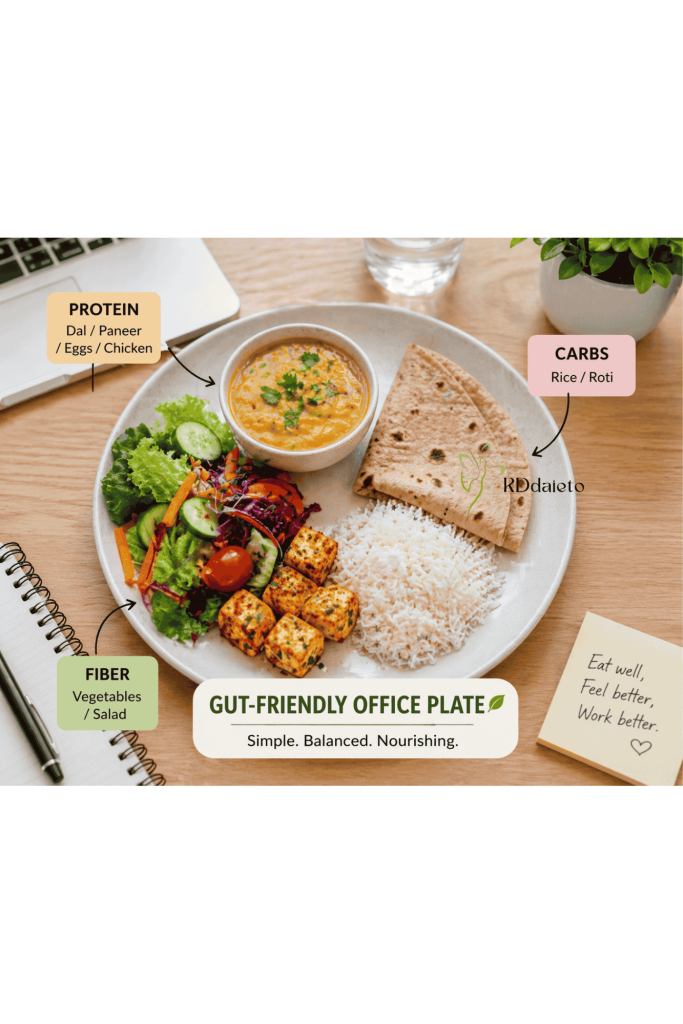
This helps:
- Stabilize blood sugar
- Reduce cravings
- Improve digestion
Avoid relying only on:
- Tea + biscuits
- Instant noodles
- Fried snacks
These give temporary comfort but worsen gut health over time.
3. Hydration is Not Optional
Most corporate professionals are dehydrated without realizing it.
Low water intake leads to:
- Constipation
- Acidity
- Fatigue
Easy fix:
- Keep a water bottle on your desk
- Set reminders every hour
- Aim for at least 2–2.5 liters daily
Even small sips throughout the day make a difference.
4. Be Mindful While Eating (Even in Office)
You might be eating, but are you really paying attention?
Eating while:
- Checking emails
- Attending meetings
- Scrolling your phone
…affects digestion.
Try this instead:
- Take 10–15 minutes for your meal
- Chew properly
- Sit calmly while eating
This simple habit can reduce bloating significantly.
5. Manage Stress in Micro Moments
You cannot eliminate office politics. But you can manage how your body responds.
Quick techniques during office hours:
- Deep breathing for 2 minutes
- Short walk after meals
- Stepping away from your desk briefly
These small pauses:
- Calm your nervous system
- Improve digestion
- Reduce emotional eating
You don’t need an hour of meditation. Just a few conscious breaks.
6. Limit Caffeine and Emotional Eating
Stress often leads to:
- Excess tea/coffee
- Sugar cravings
- Mindless snacking
While it feels comforting, it worsens gut issues.
What you can do:
- Limit caffeine to 1–2 cups/day
- Replace one tea break with fruit or buttermilk
- Notice emotional hunger vs real hunger
Ask yourself:
“Am I hungry, or just stressed?”
7. Improve Sleep—Your Gut Depends on It
Late nights + overthinking = poor digestion.
When sleep is disturbed:
Gut bacteria balance is affected
Hunger hormones get disrupted
Cravings increase
Simple steps:
Avoid heavy meals late at night
Reduce screen time before bed
Try to sleep at a fixed time
Better sleep = better gut recovery.
A Realistic Day Plan for Corporate Professionals
Here’s a simple structure you can follow:
Morning:
Warm water
Balanced breakfast (protein + carbs)
Mid-morning:
Fruit or nuts
Lunch:
Home-style meal with balance
Evening:
Light snack + tea (limit sugar)
Dinner:
Light, easy-to-digest meal
This is not restrictive. It’s sustainable.
Emotional Health Matters More Than You Think
Let’s be honest.
Sometimes it’s not the food—it’s the environment.
You might be:
- Eating well but still feeling uneasy
- Trying to stay healthy but feeling drained
That’s because emotional stress directly affects your gut.
What helps:
- Talking to someone you trust
- Setting boundaries at work
- Not taking everything personally
You don’t have to “win” office politics. You just need to protect your health.
When Should You Seek Help?
If your symptoms are:
- Persistent
- Affecting your daily life
- Not improving with basic changes
It’s time to seek professional guidance.
A personalized plan can help you:
- Identify triggers
- Fix nutrient gaps
- Create a routine that fits your work life
Ultimately: Your Gut Deserves Attention Too
- You handle deadlines.
- You manage people.
- You deal with pressure every day.
But somewhere in between, your health gets pushed aside.
Your gut is not asking for perfection. It’s asking for consistency, care, and small mindful choices.
Even in a stressful work environment, you can take control—one meal, one habit, one decision at a time.
For Corporate Teams & Working Professionals
If your employees are dealing with:
- Low energy
- Digestive issues
- Poor focus due to stress
It’s not just a health issue—it’s a productivity issue.
Let’s work together:
I conduct corporate nutrition sessions and offer personalized consultations designed specifically for busy professionals.
👉 Build a healthier, more focused workplace
👉 Help your team feel better, not just work better
Connect with me to organize a session or book a consultation.
